The 12 Best Reputation Management Software Platforms for 2026
Updated January 31, 2026

What is reputation management software? In simple terms, it's a set of tools that help businesses monitor, influence, and protect how they are perceived online. By 2026, this concept has expanded far beyond just tracking five star reviews. It's now about managing what AI search engines like ChatGPT, Perplexity, and Google’s AI Overviews say about your brand. With research from BrightLocal showing that 88% of consumers trust online reviews as much as personal recommendations, and AI driven search reshaping information discovery, proactively managing your digital narrative is critical for survival and growth.
Without a clear strategy, you risk letting competitors, misinformation, or negative sentiment define you in this new era of generative SEO. The challenge isn't just listening; it's about actively shaping the conversation where it matters most, whether on review platforms or within the data sources feeding next generation search results. When considering how to safeguard your brand's image, leveraging specialized SEO reputation management can be a powerful proactive measure. This strategic approach ensures your positive online assets are visible and influential, directly impacting how both customers and algorithms perceive you.
This guide breaks down the essential tools designed to help you not only protect your brand but also leverage your reputation to drive measurable results. We've analyzed the best reputation management software, providing a detailed look at features, pricing, and ideal use cases. Each option includes screenshots and direct links to help you find the perfect platform to become the guardian of your brand's digital presence.
1. Riff Analytics
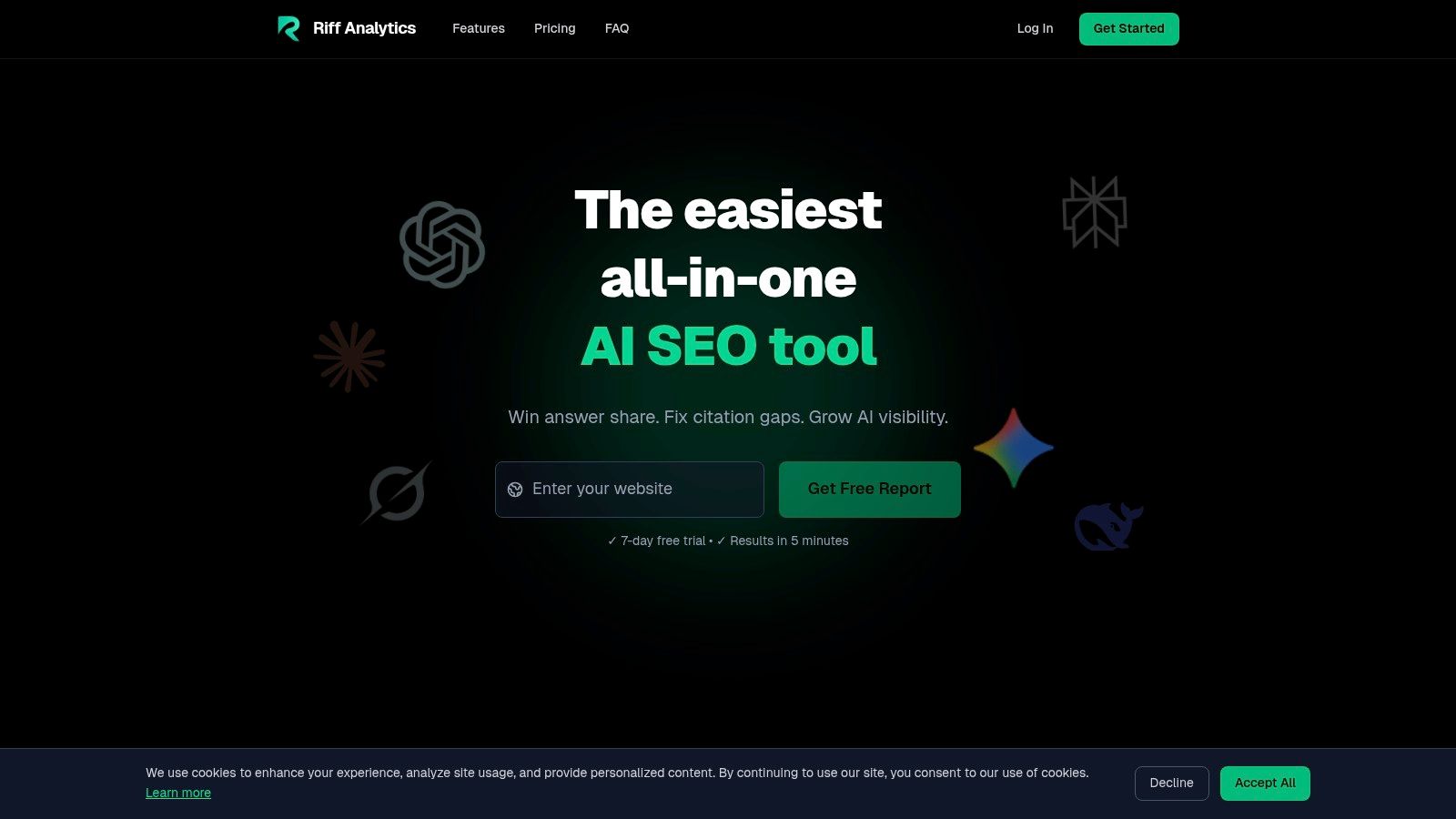
Riff Analytics positions itself as an essential tool for the next frontier of online reputation: AI driven search. While traditional reputation management software focuses on reviews and social media, Riff Analytics is laser focused on monitoring and improving brand visibility within generative AI responses. This specialized platform provides SEO, content, and growth marketing teams with the precise data needed to understand and influence how their brand is portrayed across major AI engines like ChatGPT, Google AI Overviews, Perplexity, and Claude.
Understanding AI Visibility with This Management Software
The platform's core strength lies in its ability to move beyond simple mention tracking. It provides deep diagnostics on why and how a brand is being cited, surfacing the exact source materials that AI models rely on. This granular insight is critical for modern reputation management, as a single citation from an authoritative source can shape a brand's narrative across millions of AI generated answers. Riff Analytics effectively turns the black box of AI responses into a transparent, actionable marketing channel, which is crucial for modern LLM tracking.
Why Riff Analytics is a Top Tier Reputation Management Tool
What sets Riff Analytics apart is its proactive, strategic approach. Instead of just reacting to negative sentiment, it equips teams to build a positive reputation foundation within the AI ecosystem. Its AI readiness audits and citation gap analysis provide a clear roadmap for optimization. Users can quickly identify competitor owned citations and high impact pages that need updating to earn more AI mentions, making it one of the best reputation management software choices for teams focused on future proofing their brand.
- Best For: SEO and content teams at B2B SaaS companies, marketing agencies, and competitive intelligence analysts focused on winning visibility in AI search.
- Pricing: Custom pricing is available upon request or after signing up for a trial. A 7 day free trial is offered.
- Unique Feature: Comprehensive citation source tracking and gap analysis across a wide range of leading AI models.
Pros:
- Extensive AI Engine Coverage: Tracks mentions and citations across all major AI chatbots and Google's AI Overviews.
- Actionable Insights: AI readiness audits and citation gap reports provide a prioritized list of optimization tasks.
- Rapid Onboarding: Delivers initial results in minutes with a user friendly interface that requires no deep technical expertise.
- Competitive Benchmarking: Trend dashboards allow you to measure your AI visibility against key competitors over time.
Cons:
- Opaque Pricing: You must contact the sales team or start a trial to understand the cost structure.
- Influence, Not Control: The platform can identify opportunities but cannot guarantee placement in AI generated responses, as this depends on the models' algorithms.
2. Reputation
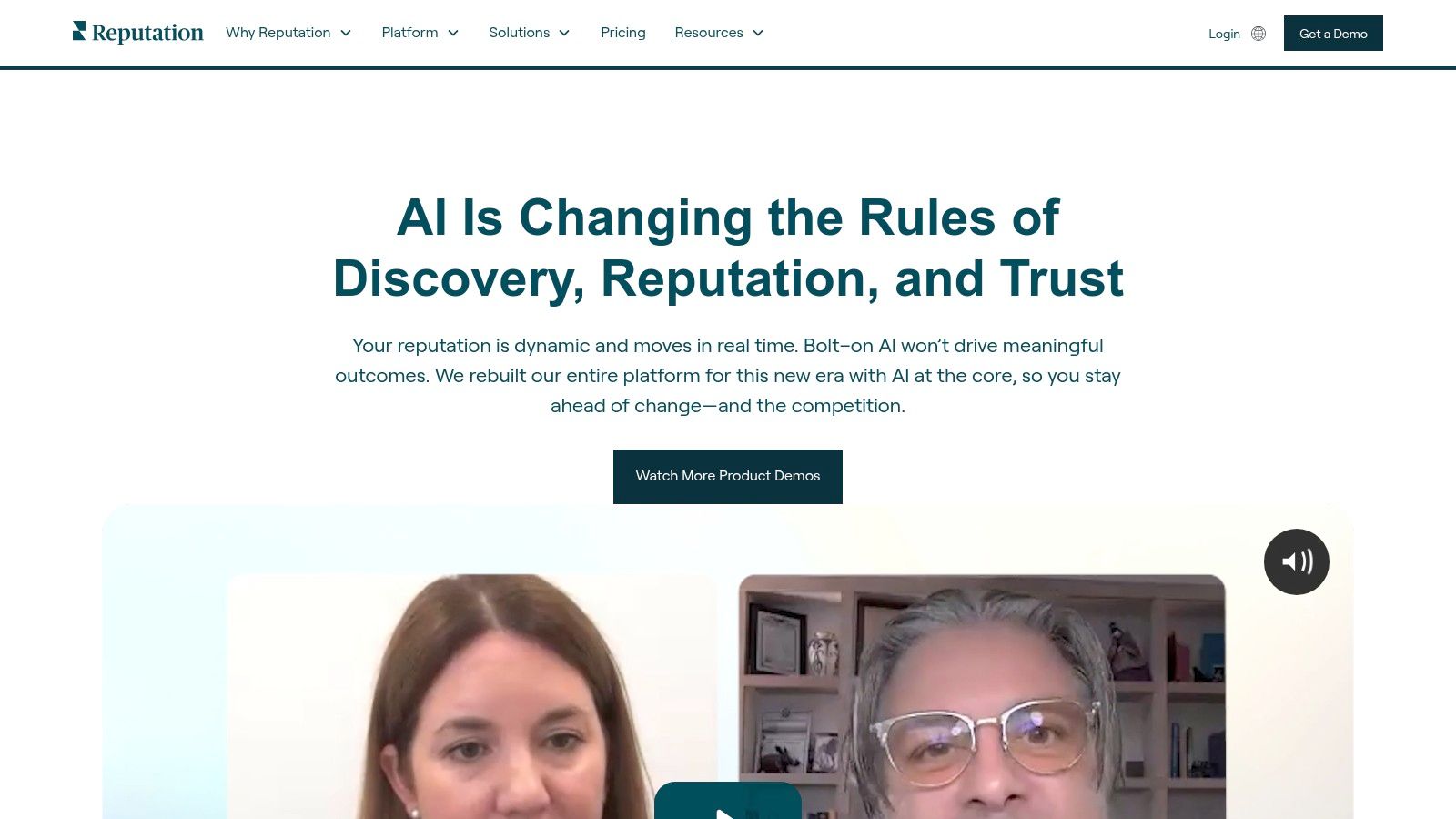
Reputation is a comprehensive, full stack platform designed specifically for the complex needs of multi location businesses. It excels at unifying disparate data streams including online reviews, business listings, social media mentions, and customer surveys into a single, actionable dashboard. This makes it a powerful choice for organizations like retail chains, healthcare systems, and automotive groups that need to manage brand perception consistently across dozens or hundreds of physical locations.
A Great Reputation Platform for Multi Location Brands
What truly sets Reputation apart is its proprietary "Reputation Score." This metric provides a benchmark score for each location, allowing teams to compare performance, identify underperforming branches, and allocate resources effectively. This focus on location specific analytics makes it one of the best reputation management software options for enterprises. The platform also offers robust integrations and managed services, catering to large teams that require hands on support.
- Key Features: Centralized review management (250+ sites), large scale listings management, integrated customer surveys, and the proprietary Reputation Score.
- Pros: Transparent per location pricing, strong enterprise integrations, and actionable benchmarking analytics.
- Cons: Certain valuable features are paid add ons, and it may be cost prohibitive for single location businesses.
- Website: https://www.reputation.com
3. Birdeye
Birdeye positions itself as an all in one experience marketing platform, designed primarily for local businesses, from single location SMBs to large multi location franchises. Its core strength lies in unifying review generation, business listings management, customer messaging, and social media engagement into a single, cohesive dashboard. This integrated approach helps businesses consolidate their local marketing stack and drive growth through improved online visibility and customer interactions.

Finding the Best Online Reputation Software for Local Business
What makes Birdeye a standout contender for the best reputation management software is its seamless integration of AI across its product suite. The platform uses AI to help draft review responses, manage listings, and power automated webchats, all included within its standard plans. This focus on bundling advanced technology without extra fees provides significant value, especially for teams looking to leverage AI to enhance efficiency in customer engagement and online presence management.
- Key Features: AI powered review generation and response, comprehensive listings synchronization, unified messaging inbox (webchat, text), and integrated social media management.
- Pros: Broad, all in one feature set for local growth, consistently high rankings in G2 ORM reports, and scales effectively from single location to large franchises.
- Cons: Pricing is not publicly available, and some users report a learning curve or occasional support delays.
- Website: https://birdeye.com
4. Podium
Podium carves out a unique niche by focusing on interaction management, primarily leveraging SMS and webchat to connect local businesses with their customers. It goes beyond simple review monitoring, positioning itself as a communication platform that turns customer conversations into reviews, leads, and sales. This text first approach is highly effective for industries like home services, automotive repair, and retail, where immediate and convenient communication drives customer satisfaction and loyalty.
Why This Reputation Management Tool Excels at Conversions
What truly sets Podium apart is its seamless integration of review generation into the customer service workflow. After a service is completed or a purchase is made, a review invitation can be sent directly via text message, significantly increasing response rates. According to Podium's own data, businesses see an average 6% increase in their Google review rating within the first few months. The platform unifies all incoming messages from SMS, webchat, and even social media into a single inbox, making it one of the best reputation management software choices for businesses that prioritize conversational commerce.
- Key Features: SMS based review invites and responses, a centralized inbox for webchat and texts, integrated payment processing, and industry specific packages.
- Pros: Excellent for text first customer communication, verticalized packages tailored to specific sector needs, and dedicated customer success for setup.
- Cons: Pricing is not publicly listed and requires a custom quote, and additional SMS surcharges may apply depending on usage.
- Website: https://www.podium.com
5. Yext Reviews
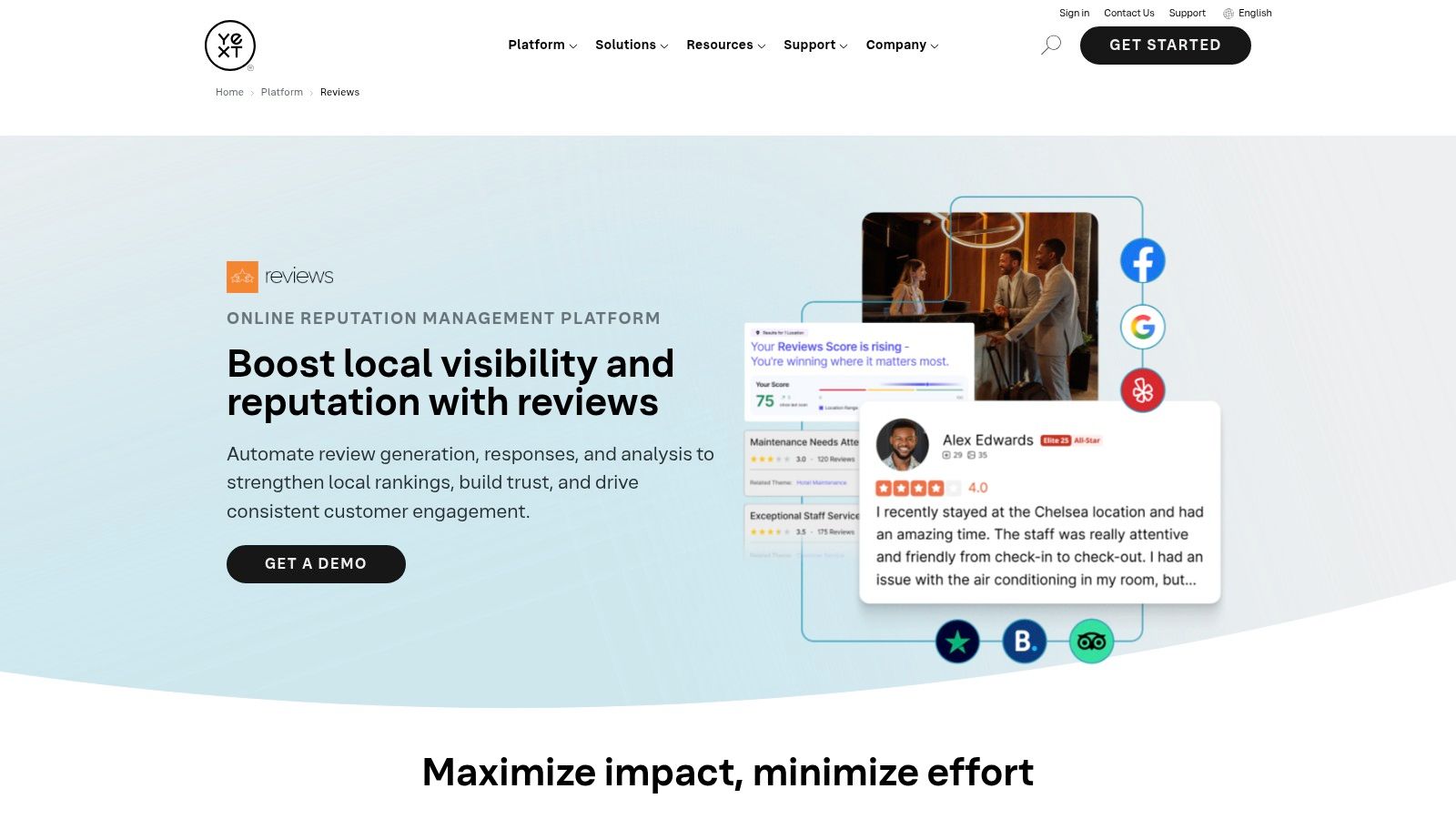
Yext Reviews is a powerful component of the broader Yext Digital Experience Platform, designed primarily for multi location businesses that need to integrate review management with their core business listings and on site search experiences. It provides a centralized hub to monitor, analyze, and respond to customer feedback from numerous sources. This integration makes it a compelling choice for brands already invested in the Yext ecosystem, as it connects customer sentiment directly to location data and search analytics.
Evaluating Reputation Management Services for Enterprises
What makes Yext stand out is its deep integration with a business's first party data. By combining reviews with its Listings and Search products, Yext enables organizations to see a complete picture of the customer journey, from discovery to feedback. Its AI assisted workflows help teams streamline responses by suggesting replies based on review sentiment and content, which is a significant time saver for national brands and franchises. This holistic approach solidifies its position as one of the best reputation management software solutions for enterprises prioritizing data unity.
- Key Features: Centralized review monitoring and response, sentiment analysis, AI assisted response suggestions, and deep integration with Yext Listings and Search.
- Pros: Excellent for existing Yext users, scales effectively for franchises and large enterprises, and AI workflows improve team efficiency.
- Cons: Pricing is not transparent and is most cost effective when bundled with other Yext products, potentially making it less accessible for some.
- Website: https://www.yext.com/products/reviews/
6. ReviewTrackers
ReviewTrackers, now part of InMoment, is a powerful reputation and customer experience platform built for scalability. It excels at aggregating customer feedback from over 100 review sources into a unified dashboard, making it simple for businesses to monitor, respond to, and generate new reviews. The platform is especially effective for multi location businesses, providing clear alerts and performance metrics that help teams manage brand perception consistently across all branches.
The Ideal Management Tool for Customer Experience Analytics
What makes ReviewTrackers a standout choice is its focus on actionable insights and operational efficiency. The platform uses AI to analyze customer sentiment, identify trending keywords, and even suggest response templates, which helps teams respond faster and more effectively. This focus on turning feedback into operational improvements makes it one of the best reputation management software tools for businesses aiming to enhance the customer journey. You can learn more about how to track brand mentions online to complement these efforts.
- Key Features: Monitoring from 100+ sources, AI assisted review responses, email and SMS review requests, and competitor analysis.
- Pros: Clear location based packaging, unlimited user access on core plans, and practical add on modules.
- Cons: Pricing is not transparent on the website, and advanced analytics and listings management are sold as separate add ons.
- Website: https://www.reviewtrackers.com
7. Sprout Social
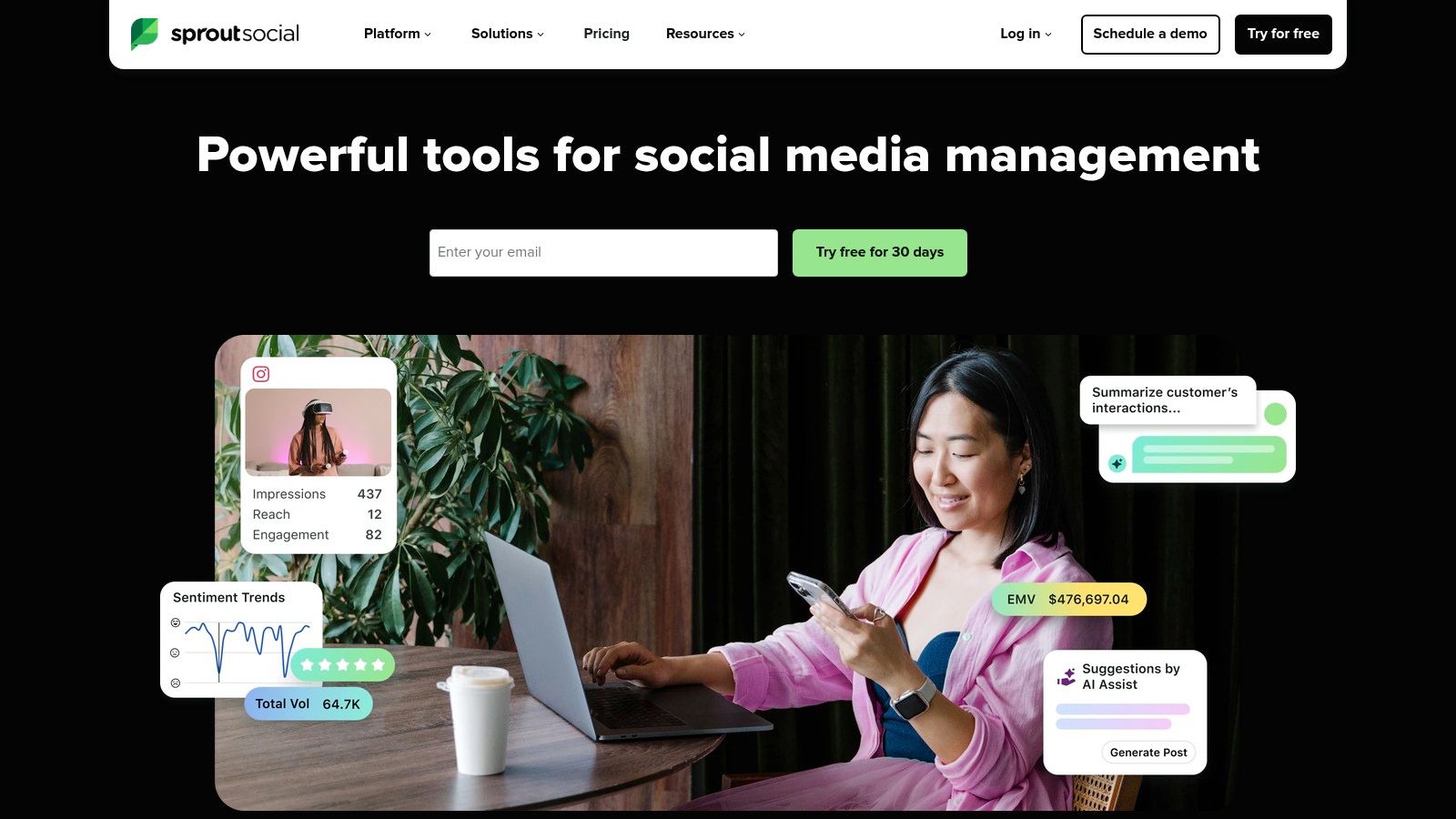
Sprout Social is a social media management powerhouse that extends its capabilities into reputation management, making it an ideal solution for teams that want to consolidate their social marketing and review monitoring into a single platform. It integrates review management from key sites like Google and Facebook directly into its unified Smart Inbox. This allows social media managers and community teams to handle customer comments, direct messages, and online reviews from one centralized queue, streamlining workflows and ensuring faster response times.
Choosing a Reputation Platform for Social Media Teams
What makes Sprout Social a unique entry in the best reputation management software category is its holistic approach to brand voice and customer care. By combining publishing, analytics, and engagement tools, it helps brands not only react to their reputation but proactively shape it. Its listening tools also allow teams to track conversations and sentiment, helping them understand their overall brand perception and how to calculate share of voice in their market. The inclusion of AI Assist for crafting replies helps maintain a consistent brand tone across all interactions.
- Key Features: Unified inbox with Google and Facebook review management, advanced publishing and scheduling, social listening, and AI Assist for replies.
- Pros: Transparent per seat pricing with a free trial, combines social media management and reviews in one UI, and scales well for teams of all sizes.
- Cons: Pricing is based on the number of users, and advanced listening or reporting features may require more expensive tiers.
- Website: https://sproutsocial.com
8. Trustpilot Business
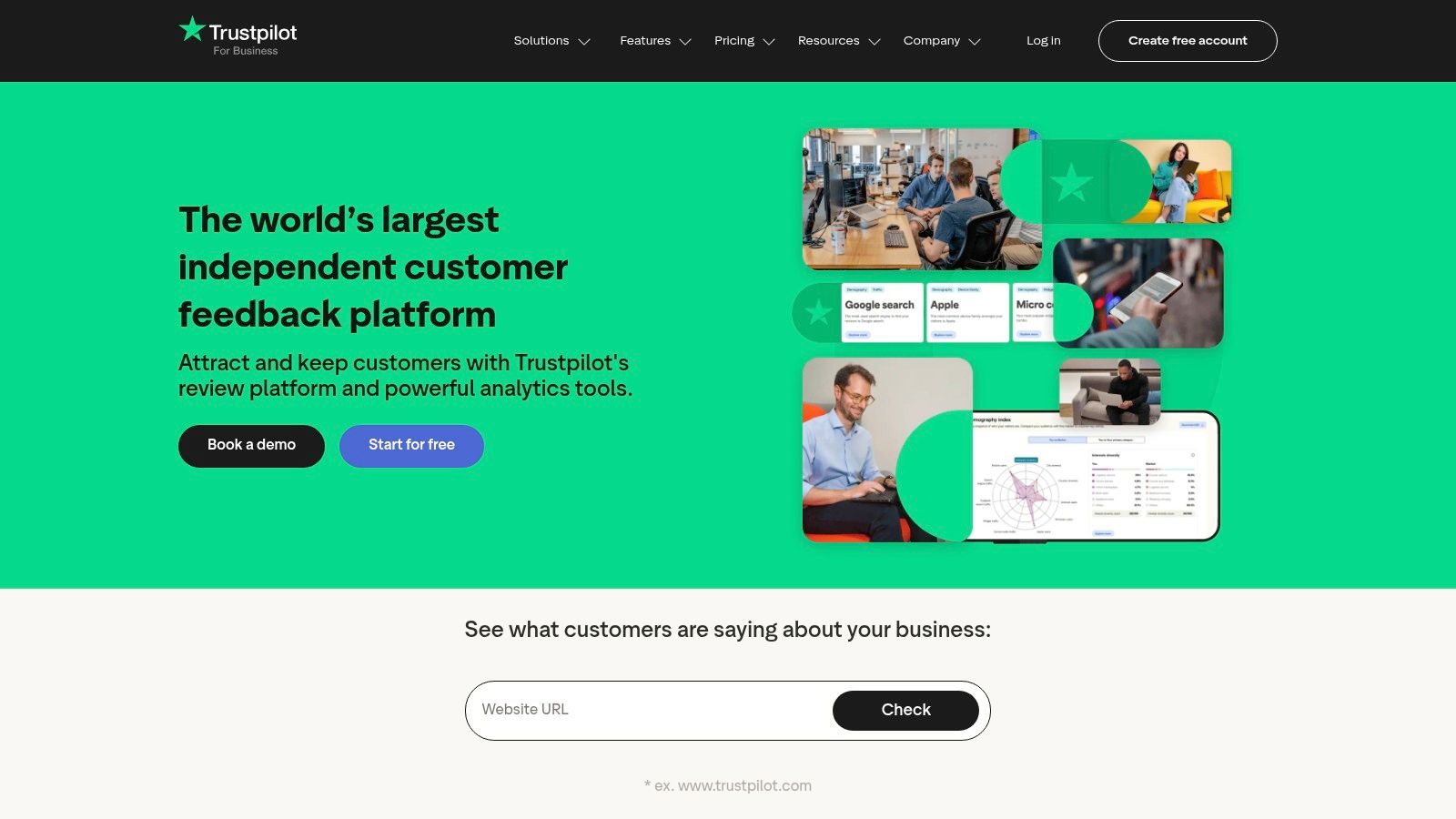
Trustpilot Business is a globally recognized, consumer facing review platform that provides businesses with tools to actively collect, manage, and showcase customer feedback. Unlike internal focused software, its primary strength lies in leveraging public social proof to build brand trust and influence purchasing decisions. It’s an excellent choice for e commerce and B2C companies aiming to merchandise customer sentiment directly on their websites and across marketing channels to boost conversion rates.
How This Reputation Software Leverages Social Proof
What makes Trustpilot stand out is its emphasis on transparency and its powerful marketing assets. Businesses can use automated invitation tools to gather verified reviews and then display them using a variety of on site widgets, which can significantly enhance credibility at key conversion points. The platform’s "TrustScore" provides a clear, public facing benchmark of customer satisfaction, turning positive feedback into a tangible asset for brand positioning and making it a vital piece of the best reputation management software stack for consumer centric brands.
- Key Features: Verified review invitations, a large library of on site widgets, TrustScore benchmarking insights, and marketing asset creation.
- Pros: High global consumer recognition, transparent public pricing and plans, and strong conversion focused assets like widgets.
- Cons: The public nature can attract unsolicited or spam reviews requiring moderation, and many advanced features are gated behind higher tiers or add ons.
- Website: https://business.trustpilot.com
9. NiceJob
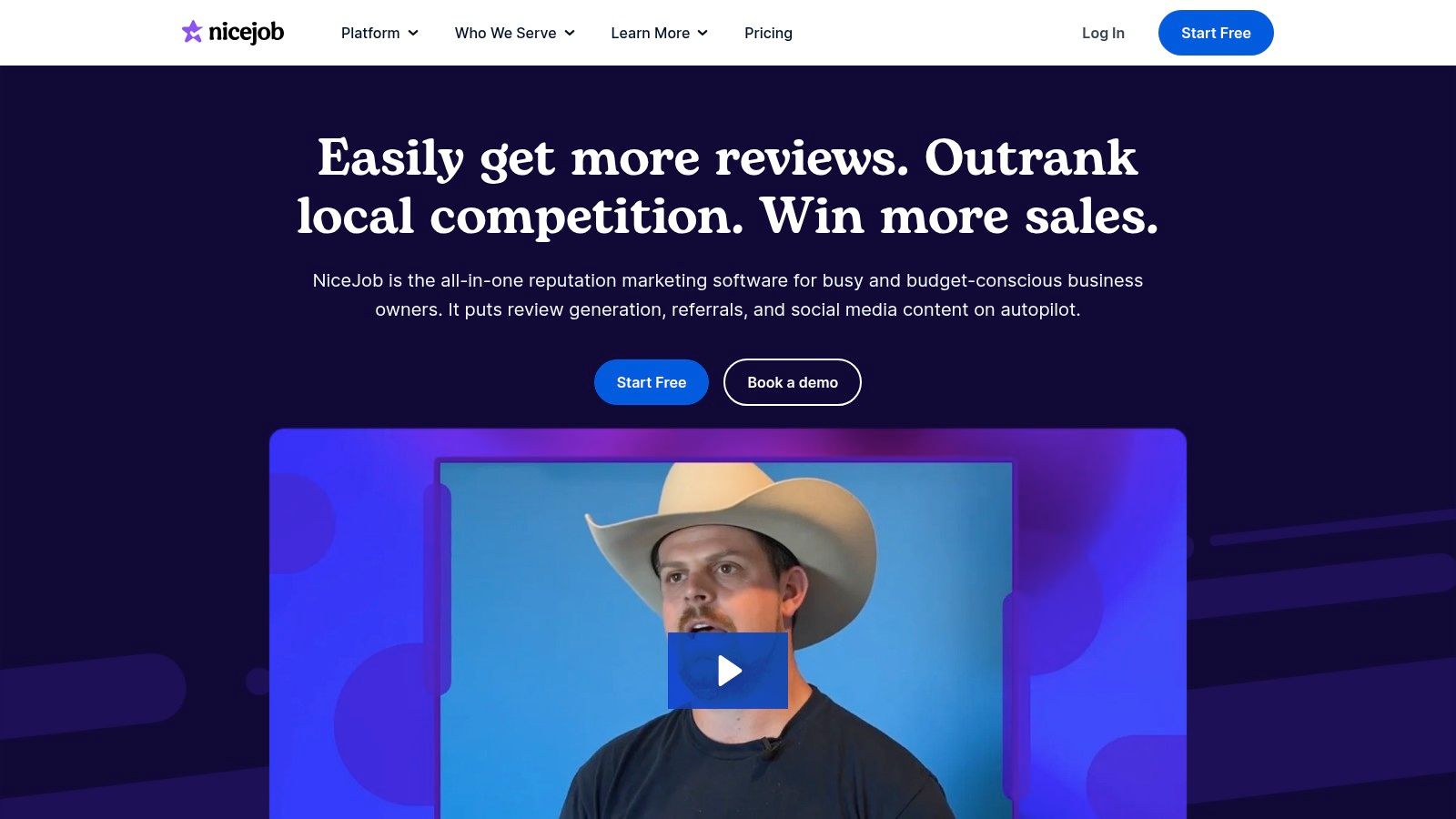
NiceJob is a reputation marketing platform built specifically for local and service based businesses that want to turn customer satisfaction into a powerful lead generation engine. It focuses on automating the review collection process, making it simple for small teams to consistently gather feedback and new reviews on critical sites like Google and Facebook. Its lightweight approach is designed for quick setup and immediate impact, moving beyond simple monitoring to actively market a company's positive reputation.
The Top Reputation Management Software for Automation
What makes NiceJob a unique contender in the best reputation management software space is its emphasis on "reputation marketing." The platform provides social proof widgets that can be embedded directly onto a business website, showcasing the latest and greatest reviews to build trust with potential customers. For businesses needing a stronger online presence, NiceJob also offers optional conversion optimized microsites or full websites designed to turn that hard earned reputation into tangible leads and sales.
- Key Features: Automated review requests and multi site routing, on site social proof widgets and microsites, optional conversion focused websites, and referral tools.
- Pros: Automation first approach is ideal for busy SMBs, quick setup with valuable on site widgets, and the option to bundle a conversion focused website.
- Cons: Reporting capabilities are more basic compared to enterprise suites, and pricing details should be confirmed directly with the vendor for accuracy.
- Website: https://get.nicejob.com
10. G2 – Online Reputation Management category
Rather than a single software, G2’s Online Reputation Management category serves as an essential research hub for buyers. It functions as a comprehensive software marketplace, aggregating hundreds of user verified reviews, comparison grids, and real time satisfaction scores for dozens of tools. This meta resource allows marketing teams to filter and shortlist potential solutions based on specific needs like company size, required features, and user ratings, making it a critical first step in the procurement process.
Using a Marketplace to Find a Reputation Management Company
What makes G2 invaluable is its transparent, crowd sourced data. Instead of relying solely on vendor marketing copy, you can access unfiltered buyer insights, side by side product comparisons, and implementation data. This peer driven approach provides a more authentic view of a tool's capabilities and limitations, helping you identify the best reputation management software for your specific use case. The platform provides direct links to vendor pages, simplifying the transition from research to requesting a demo or starting a trial.
- Key Features: Current user reviews and satisfaction scores, side by side comparisons, category filters for features and company size, and direct links to vendors.
- Pros: Large, fresh corpus of user reviews, helpful comparison tools and segment filters, and direct vendor access for trials or demos.
- Cons: Sponsored placements can influence visibility, and pricing information on the platform may occasionally lag behind vendor changes.
- Website: https://www.g2.com/categories/online-reputation-management
11. Capterra – Reputation Management Software category
Capterra is not a reputation management tool itself but a widely used software directory that serves as an essential starting point for buyers. Its dedicated reputation management software category provides a comprehensive market overview, allowing teams to compare dozens of tools based on features, user ratings, and pricing models. This makes it an invaluable resource for organizations at the initial research stage, helping them create a shortlist of potential vendors before scheduling demos.
Comparing Reputation Management Systems with Directories
The platform's strength lies in its powerful filtering capabilities, which let users narrow down the best reputation management software by specific criteria like industry, business size, and necessary integrations. Users can quickly see which tools are best for small businesses versus enterprises or which platforms integrate with their existing CRM. While sponsored listings can appear prominently, the sheer volume of genuine user reviews and detailed profiles provides a balanced perspective for making an informed decision.
- Key Features: Advanced filtering (by industry, features, pricing), verified user ratings and review summaries, buyer guides, and direct links to vendor websites.
- Pros: Broad coverage of the software market, powerful and easy to use filters, and completely free for research purposes.
- Cons: Some product listings may be outdated, and sponsored vendors are often prioritized in the default search results.
- Website: https://www.capterra.com/reputation-management-software/
12. HubSpot App Marketplace
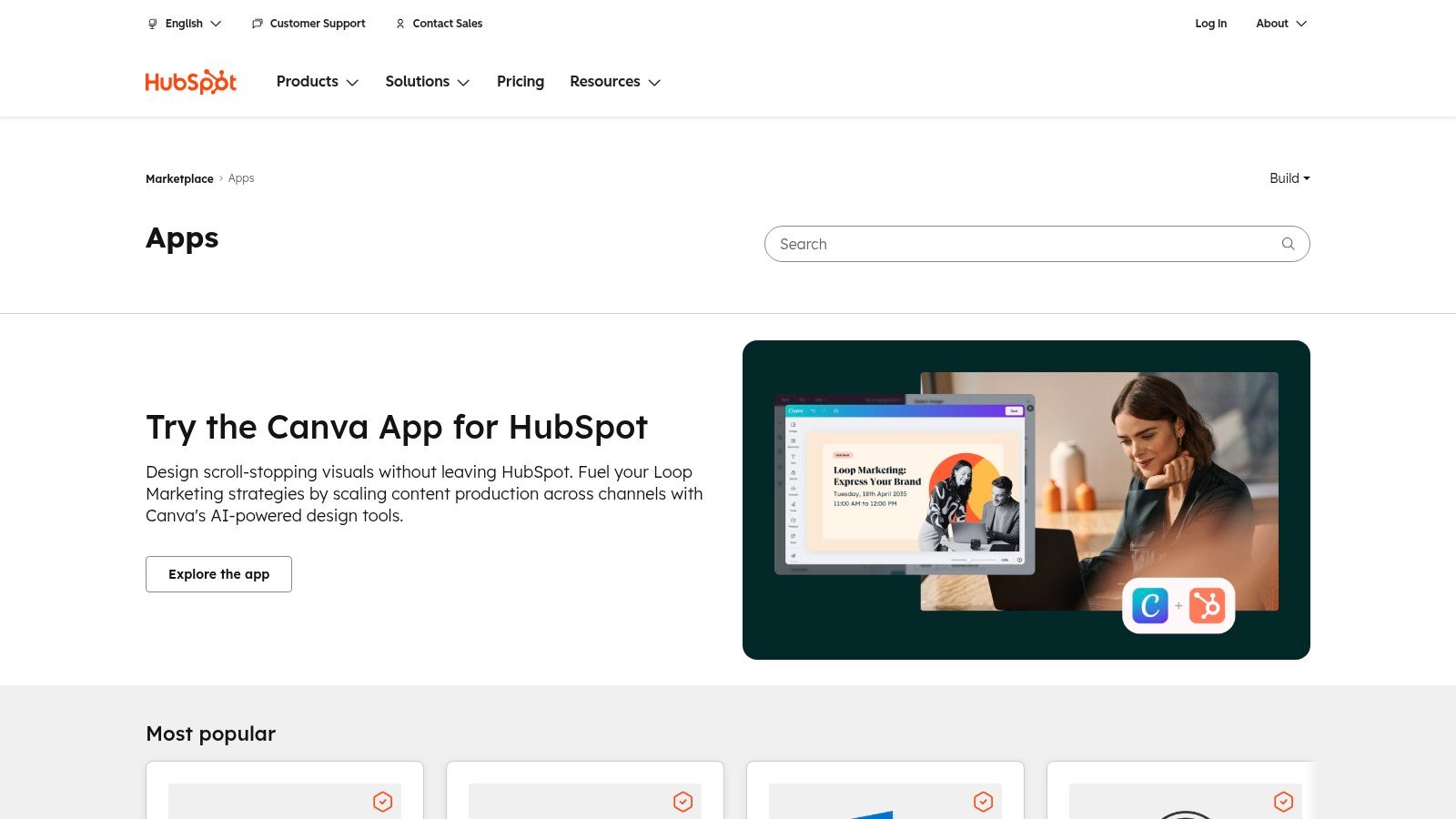
The HubSpot App Marketplace isn't a standalone reputation management platform but rather a powerful ecosystem for businesses already embedded in HubSpot's CRM. It functions as a curated directory of third party applications, allowing marketing, sales, and service teams to connect specialized ORM tools directly into their existing workflows. This approach centralizes data, connecting customer reviews and brand mentions from platforms like Trustpilot or Reputation directly to customer records and service tickets.
Finding Reputation Software that Integrates with a CRM
What makes this marketplace an essential resource is its focus on integration and workflow automation. Instead of managing reputation in a silo, teams can trigger automated sequences based on review sentiment, create support tickets from negative feedback, and enrich CRM profiles with reputation data. For those already leveraging the HubSpot ecosystem, understanding the company itself and its broader offerings can provide valuable context for tools available through the HubSpot App Marketplace. This makes it one of the best reputation management software resources for integrated business operations.
- Key Features: Searchable app listings with install counts, direct one click installation into HubSpot accounts, use case driven categories for discovery, and detailed app profile pages with support and pricing info.
- Pros: Trusted and secure ecosystem for HubSpot users, enables centralized workflow automation, and many apps offer free tiers or trials.
- Cons: It is not a standalone ORM platform; its value is exclusive to HubSpot users, and app discoverability can be affected by changes in category structure.
- Website: https://ecosystem.hubspot.com/marketplace/apps/
Comparing the Best Online Reputation Management Software
Choosing the right tool depends on your specific needs, from AI search visibility to local review generation. This table provides a quick comparison to help you shortlist the best options for your business goals.
| Tool | Focus Area | Best For | Key Differentiator |
|---|---|---|---|
| Riff Analytics | AI Search Visibility | SEO & Content Teams | Tracks citations in AI answers |
| Reputation | Multi-Location Management | Enterprise Chains | Proprietary "Reputation Score" |
| Birdeye | Local Business Growth | SMBs & Franchises | All in one platform with AI |
| Podium | Conversational Commerce | Service Businesses | SMS first communication |
| Yext Reviews | Enterprise Data Integration | Existing Yext Users | Seamless integration with Yext |
| ReviewTrackers | Customer Experience (CX) | Mid-Market Brands | Turns feedback into insights |
| Sprout Social | Social Media & Reviews | Marketing Teams | Unified social & review inbox |
| Trustpilot | Public Social Proof | E-commerce & B2C | Conversion focused widgets |
| NiceJob | Automated Review Generation | Local SMBs | "Reputation Marketing" focus |
Summary and Key Takeaways
Choosing the best reputation management software is a critical strategic decision in 2026. Your brand's digital narrative is shaped not just by reviews but by its visibility in AI search, its social media presence, and its direct customer interactions. The right platform moves beyond reactive monitoring, empowering you to proactively build a positive online presence that drives trust and revenue.
From specialized AI visibility tools like Riff Analytics to comprehensive local marketing platforms like Birdeye, the ideal solution aligns with your specific business goals, scale, and existing technology stack. The key is to prioritize platforms that offer actionable insights, seamless integration, and capabilities that address the future of search, including generative SEO and LLM tracking. By leveraging the right software, you can transform your online reputation from a defensive liability into a powerful asset for growth.
Frequently Asked Questions
What should I look for in reputation management software for 2026?
Look for tools that go beyond traditional review tracking. Prioritize features like AI search visibility monitoring, sentiment analysis for large language models (LLMs), seamless integration with your CRM, and automated workflows. The best software will help you manage your reputation across both traditional review sites and emerging AI driven search results.
How much does reputation management software cost?
Costs vary widely, from around $50 per month for a basic SMB tool to thousands per month for enterprise level, multi location platforms. Many providers like Sprout Social offer per seat pricing, while others like Reputation price on a per location basis. Always request a custom quote based on your specific needs and look for free trials to test functionality.
Can reputation management software remove negative reviews?
No, legitimate reputation management software cannot remove authentic negative reviews from third party sites like Google or Yelp. Their primary function is to help you monitor feedback, respond professionally, and generate a higher volume of positive reviews to improve your overall rating and sentiment. Removing reviews typically violates the terms of service of the review platform.
How can I manage my brand’s reputation in AI search results?
To manage your reputation in AI search, use specialized software that tracks your brand's mentions and citations within AI answers (e.g., from ChatGPT or Google's AI Overviews). This software helps you identify the source content that AI models use to form their responses. By optimizing this source content and building authority, you can positively influence how AI portrays your brand.