Comparing the Best SEO Benchmarking Tools
Updated December 4, 2025
SEO benchmarking answers a simple question: compared with the sites and brands that matter in your market, are you gaining ground? The best tools make that visible by tracking competitive baselines across rankings, backlinks, technical health, traffic trends, and now AI citation visibility.
That last category matters more than it did even a year ago. Search behavior is no longer measured only by ten blue links; over half of search queries now involve AI Overviews or assistant-style responses, which is why benchmarking has shifted toward measuring answer share alongside classic ranking data, as noted by Search Engine Land. In practice, that means modern teams need to compare not just who ranks, but who gets cited, who owns topic coverage, and which competitors are becoming the default source in AI-generated answers.
A useful way to think about seo benchmarking tools is this: general SEO platforms help you do SEO, while benchmarking tools help you measure your position against competitors and your own baseline over time. Some products in this list are broad suites with benchmarking features built in. Others are purpose-built for a narrower job, such as technical benchmarking, link-gap analysis, or AI visibility across ChatGPT, Perplexity, Gemini, Claude, and Google AI Overviews. This guide covers four practical categories: AI visibility platforms, all-in-one SEO suites, technical crawlers, and enterprise platforms.
If you only need monthly ranking checks and a basic competitor snapshot, built-in reporting inside a suite like Semrush, Ahrefs, Moz Pro, or SE Ranking is usually enough. If you need to prove share of voice, compare link gaps across rivals, benchmark crawl health before and after releases, or monitor whether your brand is cited in AI answers, a dedicated tool becomes worth the extra spend.
Understanding the Importance of a Modern SEO Benchmarking Analysis
A modern benchmarking analysis should tell you three things quickly: where you stand now, which competitors are beating you, and which gap matters first. In 2026, that usually means looking beyond rank tracking alone. Share of voice, keyword overlap, referring-domain gaps, and content depth across shared topics are among the clearest competitive signals, with share of voice and referring-domain gaps often surfacing the fastest wins for content and link-building priorities, according to this SEO benchmarks analysis.
It also needs a technical baseline. Benchmarks from the 2025 report compiled by SEOMator show top-ranking sites averaging load times under 2.5 seconds, while engagement metrics such as bounce rate and session duration increasingly reflect whether content is competitive, not just indexed; see the full SEO Benchmarks Report. Many generic tool roundups fall short: they treat benchmarking like a reporting exercise rather than a prioritization system.
And because reliable benchmarking starts with reliable competitive data collection, understanding the basics of effective SERP scraping strategies still matters. The right platform should help you turn that data into decisions, not just dashboards.
How I Picked These SEO Benchmarking Tools
I used a narrow definition for this list: a true benchmarking tool had to help compare your site against competitors or against a saved baseline over time. That ruled out products that only generate SEO recommendations without meaningful competitive measurement. To make the cut, a platform needed to be strong in at least one of these areas: rank tracking, competitor analysis, backlink benchmarking, technical audits, reporting, or AI visibility.
I also weighted tools by how well they answer real buying questions rather than checklist marketing. Can a small team get a baseline running in a day? Can an agency produce client-ready reports without exporting data into three other systems? Can an enterprise team govern multiple markets and stakeholders? And for AI search, can the tool show citation visibility and competitor gaps instead of repackaging old keyword reporting? That last point separates legacy SEO coverage from modern benchmarking.
Pricing and usability affected placement, but they were not the top criterion. An expensive tool can still be the right pick if it clearly solves an enterprise problem, and a lower-cost product can rank highly if it covers the core benchmarks well without unnecessary friction. Tools that looked strong on paper were discounted if they were too shallow in historical data, too limited in exports, or too vague about what they benchmark. Platforms with a distinct point of view were preferred: some win on technical precision, some on competitor intelligence, and some on AI visibility that older suites still only touch indirectly.
Decision Aid: Which SEO Benchmarking Tool Fits Your Situation?
If you want the short version before reading the full list, start here:
- Small business or lean in-house team: Choose SE Ranking or Moz Pro if you need straightforward rank tracking, audits, and competitor benchmarks without enterprise pricing.
- Agency or consultant: Choose Semrush for breadth and reporting, or Ahrefs if backlink and competitor research drive most client work.
- Technical SEO team: Choose Screaming Frog for crawl-to-crawl benchmarking, or Botify if your site is large enough to need logs, pipelines, and enterprise-scale diagnostics.
- Enterprise marketing org: Choose BrightEdge if governance, support, and cross-team reporting matter as much as the data itself.
- Team focused on AI visibility: Choose Riff Analytics when your biggest question is whether your brand is being cited in AI answers and where competitors are winning that attention.
One practical rule: if your SEO program is judged mostly on rankings, traffic, and backlinks, start with an all-in-one suite. If leadership is asking why competitors appear in AI answers, why technical releases keep hurting performance, or where your visibility lags despite decent traffic, move to the specialist tool for that problem.
1. Riff Analytics
Best for: AI-driven citation and visibility benchmarking
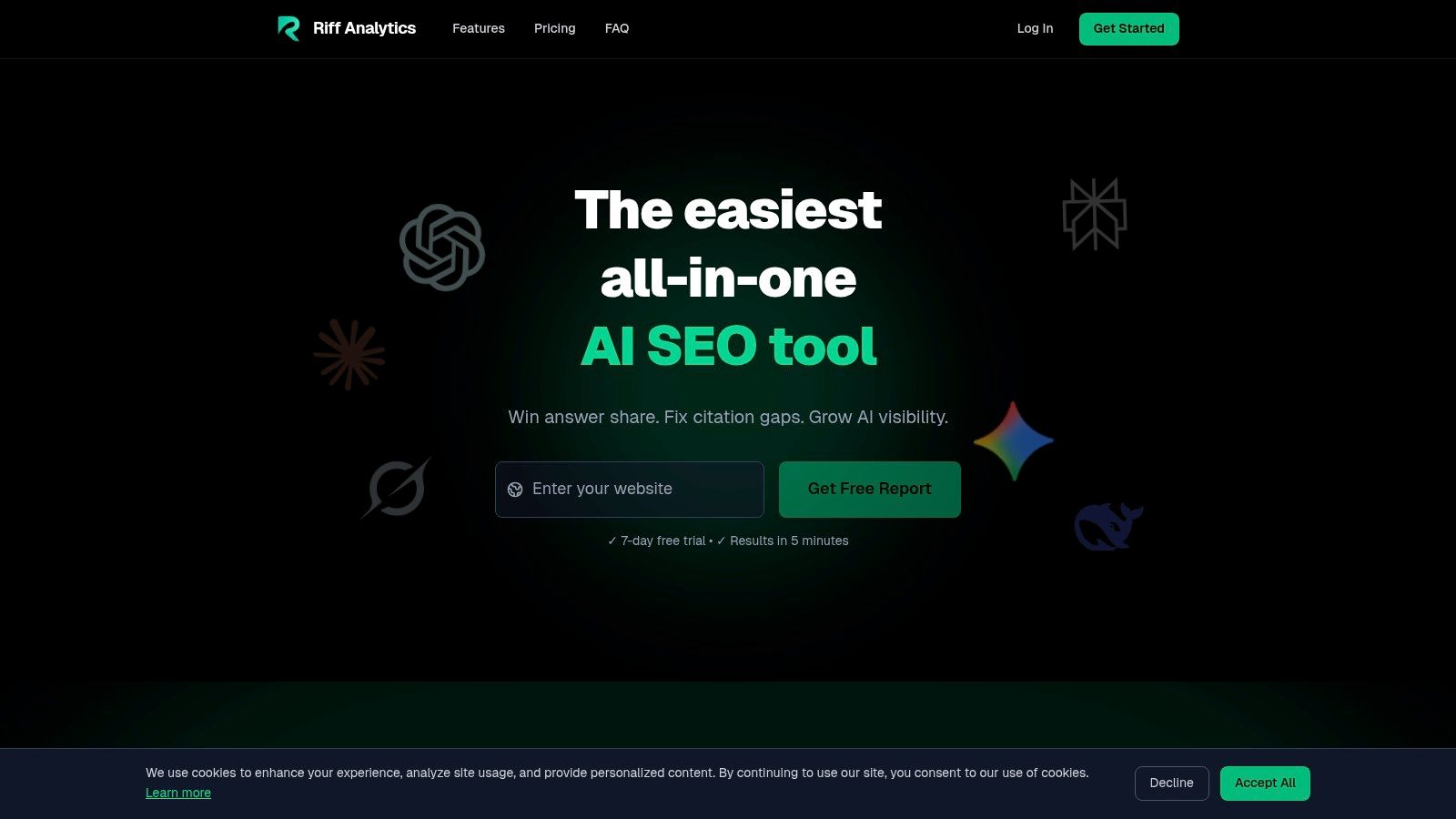
Riff Analytics stands out as a pioneering, AI-first platform redefining SEO benchmarking for the generative search era. Unlike traditional tools focused on keyword rankings, Riff is engineered to measure and improve your brand’s “answer share” within the responses of leading AI engines. It provides critical intelligence on how, where, and why your content is cited, making it an essential tool for teams looking to secure visibility in this new discovery environment. The platform delivers a powerful, initial AI-readiness audit within approximately five minutes, offering immediate insights without technical complexity.
This focus on citation-based performance makes Riff one of the most forward-looking SEO benchmarking tools available. It empowers SEO managers, content strategists, and brand teams to move beyond legacy metrics and directly address the mechanics of AI-driven discovery and generative SEO.
A Key SEO Benchmarking Platform for AI Visibility
Riff’s core strength lies in its robust tracking and actionable analysis across the most influential large language models. The platform offers multi-engine coverage, monitoring brand mentions and source citations in ChatGPT, Perplexity, Claude, Gemini, Google AI Overviews, and others. This provides a clear view of your AI search footprint. Its citation-source visibility feature is a significant differentiator. The tool doesn't just show you if you were mentioned; it reveals the specific URLs AI systems cite as sources. It also highlights "citation gaps" by identifying the competitor URLs that AI engines are referencing instead of yours. This insight is invaluable for prioritizing content updates and link-building efforts with laser precision.
The platform is designed for rapid deployment and immediate value. A user can get started with a 7-day free trial that provides full access, allowing teams to quickly assess its impact. Practical applications include running a domain audit to see how your "answer share" compares to key competitors and using citation gap analysis to identify high priority pages to create or optimize.
Learn more at RiffAnalytics.ai
2. Semrush
Semrush is a full-featured digital marketing and competitive intelligence suite, widely recognized as one of the most powerful all in one SEO benchmarking tools available. Its vast datasets for keywords, backlinks, and advertising make it an indispensable resource for organizations ranging from small businesses to large enterprises seeking a unified view of their digital footprint against competitors. The platform excels at providing deep, actionable data for benchmarking performance. Users can track daily keyword rankings, analyze historical domain authority trends, and dissect competitor backlink profiles with granular detail.
Using Semrush for SEO Performance Benchmarking
A key differentiator is its Site Audit tool, which not only identifies technical issues but also allows you to benchmark your site’s health against industry peers, helping you prioritize fixes. Semrush offers several standout features ideal for structured performance analysis: Position Tracking to monitor daily keyword movements and calculate your Share of Voice metric against competitors; Domain & Keyword Analytics to access historical data for benchmarking growth; and a Competitive Research Toolkit to gauge competitor market share and audience demographics. While powerful, the platform has its trade offs. Its breadth can create a steeper learning curve for new users, and the cost can escalate with add ons. Semrush is best suited for marketing teams that need a comprehensive, data rich environment for competitive analysis and want to integrate their benchmarking into a wider AI SEO analytics stack. See AI SEO analytics stack for guidance on building an AI SEO analytics stack with platforms like Semrush.
Website: https://semrush.com
3. Ahrefs
Ahrefs is a premier SEO platform revered for its industry-leading backlink index and powerful competitive analysis capabilities. It provides a comprehensive suite of tools that allows digital marketers to perform in-depth SEO benchmarking by deconstructing competitor strategies, from link building to content performance, making it a cornerstone for data-driven SEO.
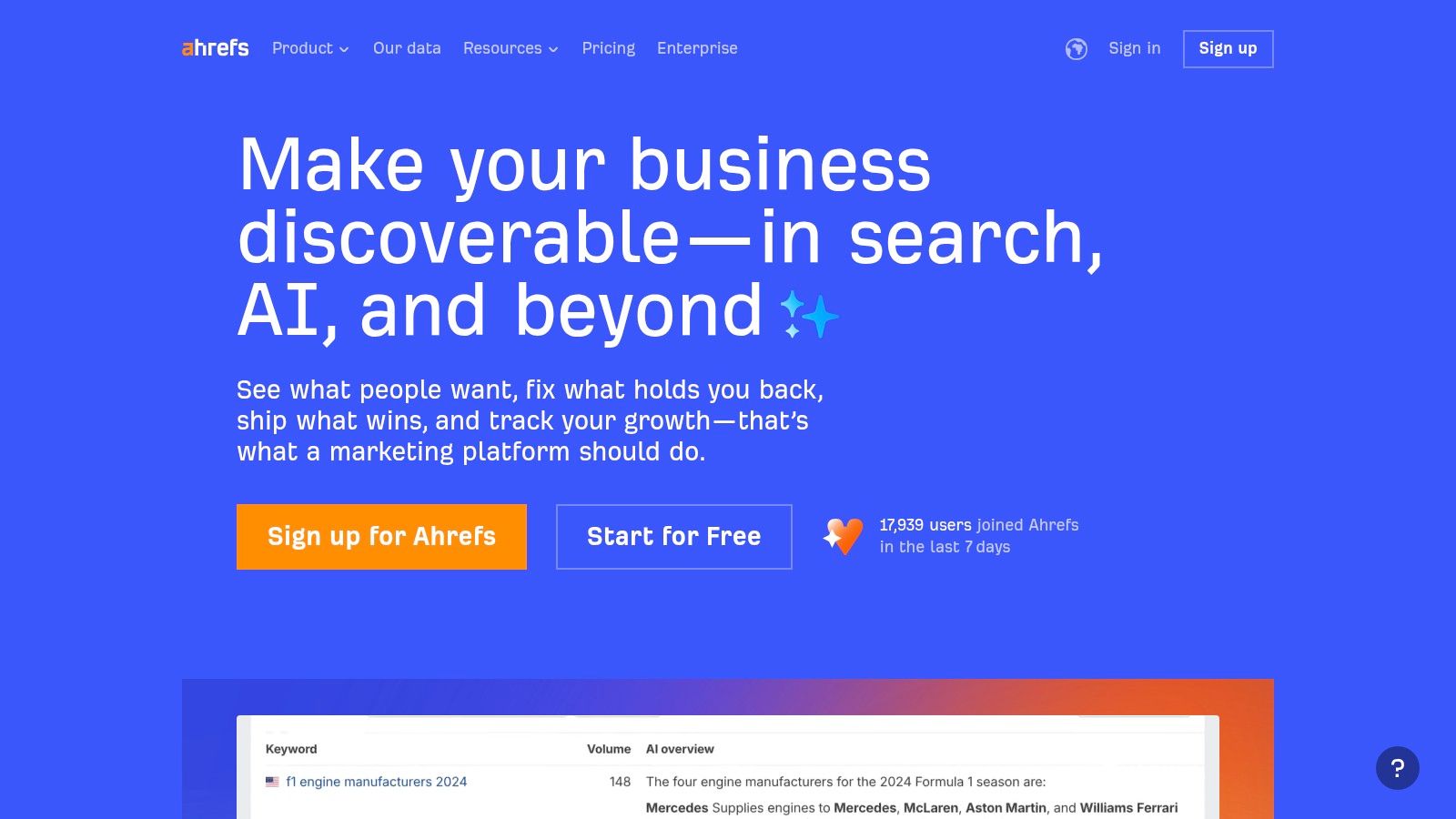
The platform is particularly distinguished by its Site Explorer tool, which offers a comprehensive view of any website's backlink profile and organic search traffic. This core feature enables users to benchmark their domain authority, referring domains, and top-performing content against any competitor with remarkable accuracy and historical depth. The intuitive interface effectively presents vast amounts of data, simplifying complex analysis.
An SEO Benchmarking Service for Link Intelligence
Ahrefs delivers several core functionalities essential for effective SEO benchmarking, including Site Explorer to analyze competitor backlink profiles, Rank Tracker to monitor keyword performance, and Keywords Explorer to benchmark your targeting strategy. Ahrefs excels at providing granular backlink data, allowing users to benchmark not just the quantity but the quality of a competitor's link profile, a critical factor for authority building. While Ahrefs is a top tier tool, its pricing and usage limits are important considerations. The platform has moved away from a traditional free trial, and higher tier plans are often necessary for accessing more extensive historical data. Ahrefs is best suited for SEO professionals and agencies who prioritize link intelligence and deep competitive backlink analysis as a core part of their SEO benchmarking tools. If competitor discovery is a sticking point, this short walkthrough on Prompt Builder is a useful companion resource for using Ahrefs Similar Sites more effectively.
Website: https://ahrefs.com
4. Moz Pro
Moz Pro is a well established, all in one SEO toolkit known for its user friendly interface and proprietary metrics. It is particularly popular with SMBs and agencies that value clarity and actionable insights for their SEO benchmarking. The platform’s core strength lies in its ability to translate complex data into understandable metrics like Domain Authority and Brand Authority, making it easier to track competitive standing over time. The toolkit provides a wide range of features, from rank tracking to site audits, that are essential for any benchmarking process.

A Competitor SEO Benchmarking Tool for SMBs
Moz Pro offers several key tools ideal for performance benchmarking against competitors, including Rank Tracking, Site Crawl Diagnostics, and Competitive Research Tools. Its popular MozBar browser extension provides instant SEO metrics for any page or SERP, allowing for quick, on the fly competitive analysis. The platform's commitment to education, through resources like the Whiteboard Friday series, empowers users to not just use the tools but to understand the strategic principles behind effective SEO benchmarking. While Moz Pro is highly accessible, its data depth for competitive intelligence may not match that of some larger enterprise focused platforms. Moz Pro is an excellent fit for small to mid sized businesses, in house marketing teams, and agencies that need a dependable, easy to use set of SEO benchmarking tools without an overwhelming level of complexity.
Website: https://moz.com
5. Screaming Frog SEO Spider
Screaming Frog SEO Spider is a desktop based website crawler renowned for its depth and flexibility in technical SEO auditing. While many platforms focus on external metrics, Screaming Frog excels as one of the quintessential SEO benchmarking tools for internal site health, allowing you to meticulously track changes and technical performance over time. It is the go to solution for detailed pre and post launch audits, site migrations, and periodic health checks.
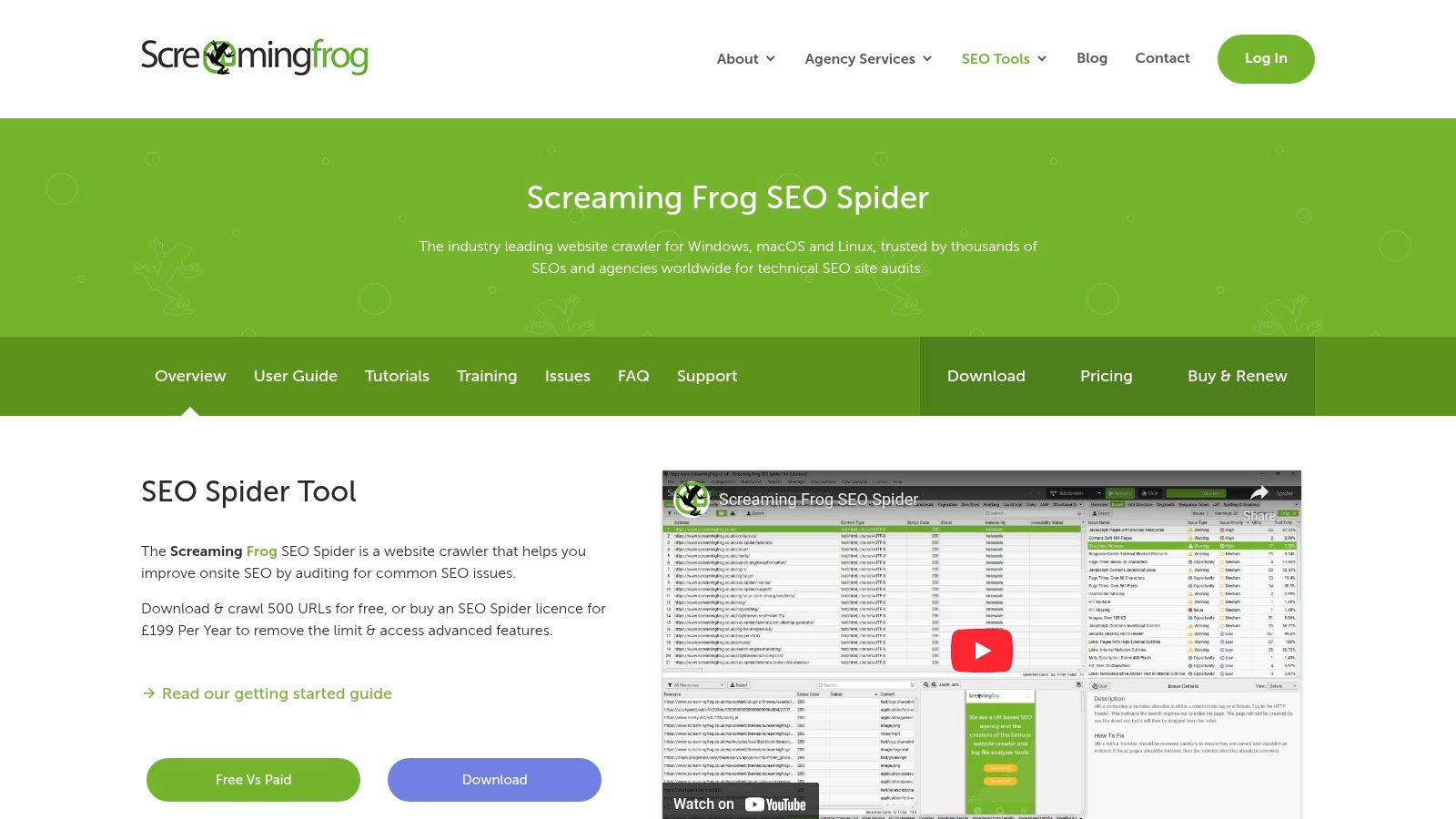
The platform’s strength lies in its ability to conduct deep crawls, render JavaScript, and perform custom data extraction. A core benchmarking feature is the Crawl Comparison function, which allows users to "diff" two crawls to pinpoint exactly what has changed, from new broken links and redirect chains to shifts in title tags or canonicals.
Your Go-To Tool for Technical SEO Benchmarking
Screaming Frog provides several powerful features ideal for technical performance benchmarking: Crawl Comparison to directly compare two crawls, API & Custom Extraction to integrate with Google Analytics and Search Console, and Scheduled Crawls to automate regular health checks. The ability to save and compare crawl files makes it a foundational tool for creating a tangible record of your website's technical SEO state. While exceptionally powerful, its nature as a desktop application comes with considerations. Crawling massive websites can be resource intensive. Screaming Frog is best suited for technical SEOs and agencies who need granular control over their technical site audits and want to establish precise benchmarks for site health. Its data provides useful input when learning more about how to integrate AI SEO with existing SEO workflows.
Website: https://www.screamingfrog.co.uk/seo-spider/
6. SE Ranking
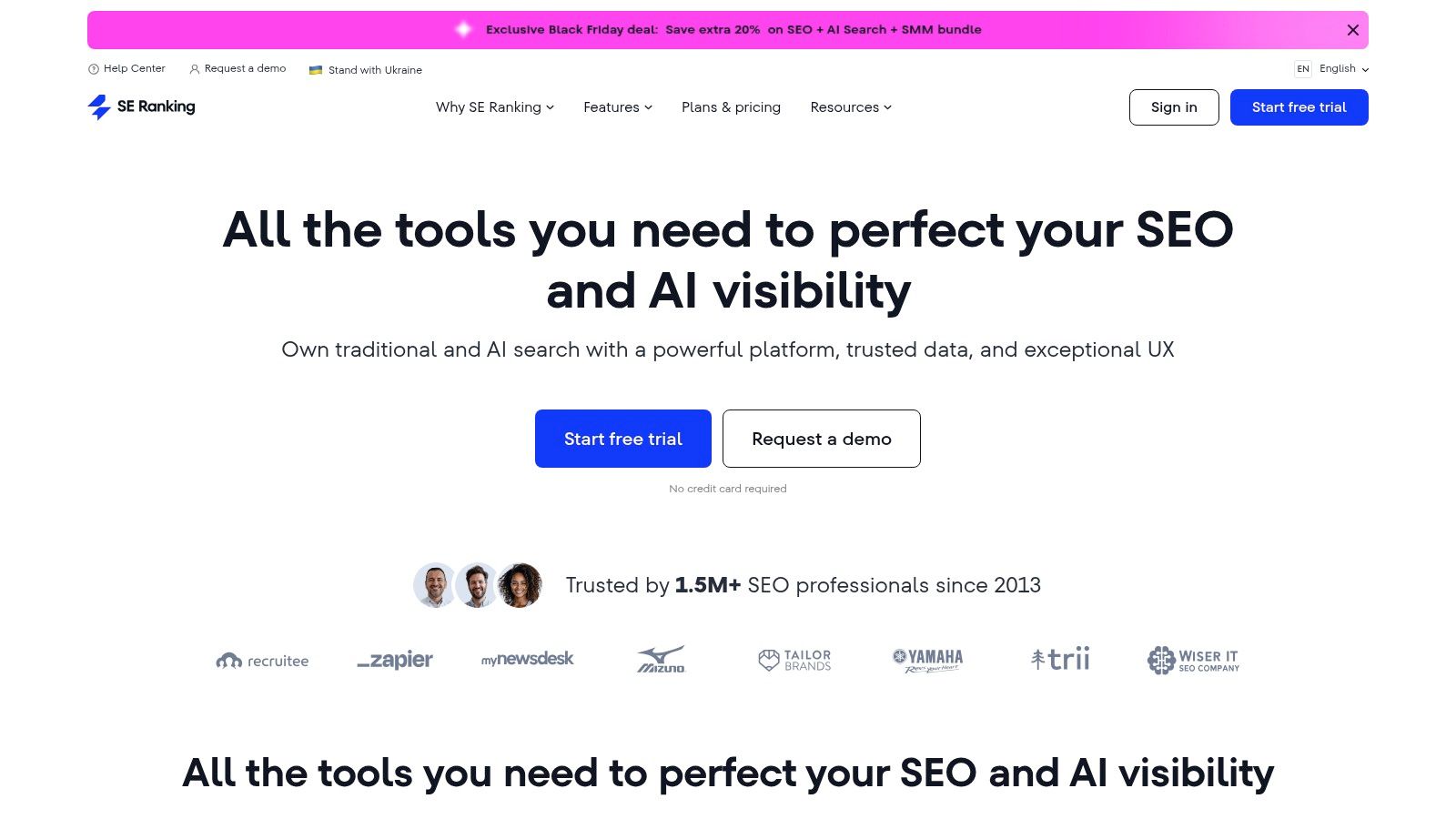
SE Ranking is a full stack SEO platform that has carved out a strong position as a versatile and accessible choice among SEO benchmarking tools. It offers a suite of features for rank tracking, site auditing, competitive research, and backlink monitoring, making it particularly popular with small to medium sized businesses and agencies looking for a powerful yet cost effective solution. The platform is designed for clarity and ease of use, enabling teams to quickly onboard and start gathering competitive intelligence.
SEO Benchmarking Software with a Strong Value Proposition
SE Ranking offers several functions perfectly suited for performance benchmarking: Daily Rank Tracking to monitor keyword positions and Share of Voice, Competitive Research to analyze competitor traffic and keywords, and a Site Audit & On Page Checker to evaluate technical health. With its native Looker Studio integration, SE Ranking enables teams to build custom, shareable benchmarking dashboards that combine SEO data with other marketing analytics for a more complete view. While an excellent value proposition, its database may not match the sheer scale of higher priced competitors. SE Ranking is best suited for SMBs, startups, and marketing agencies that need a reliable, all in one SEO platform without the enterprise level price tag. It is an ideal tool for teams who prioritize core benchmarking features and an intuitive user experience.
Website: https://seranking.com
7. SpyFu
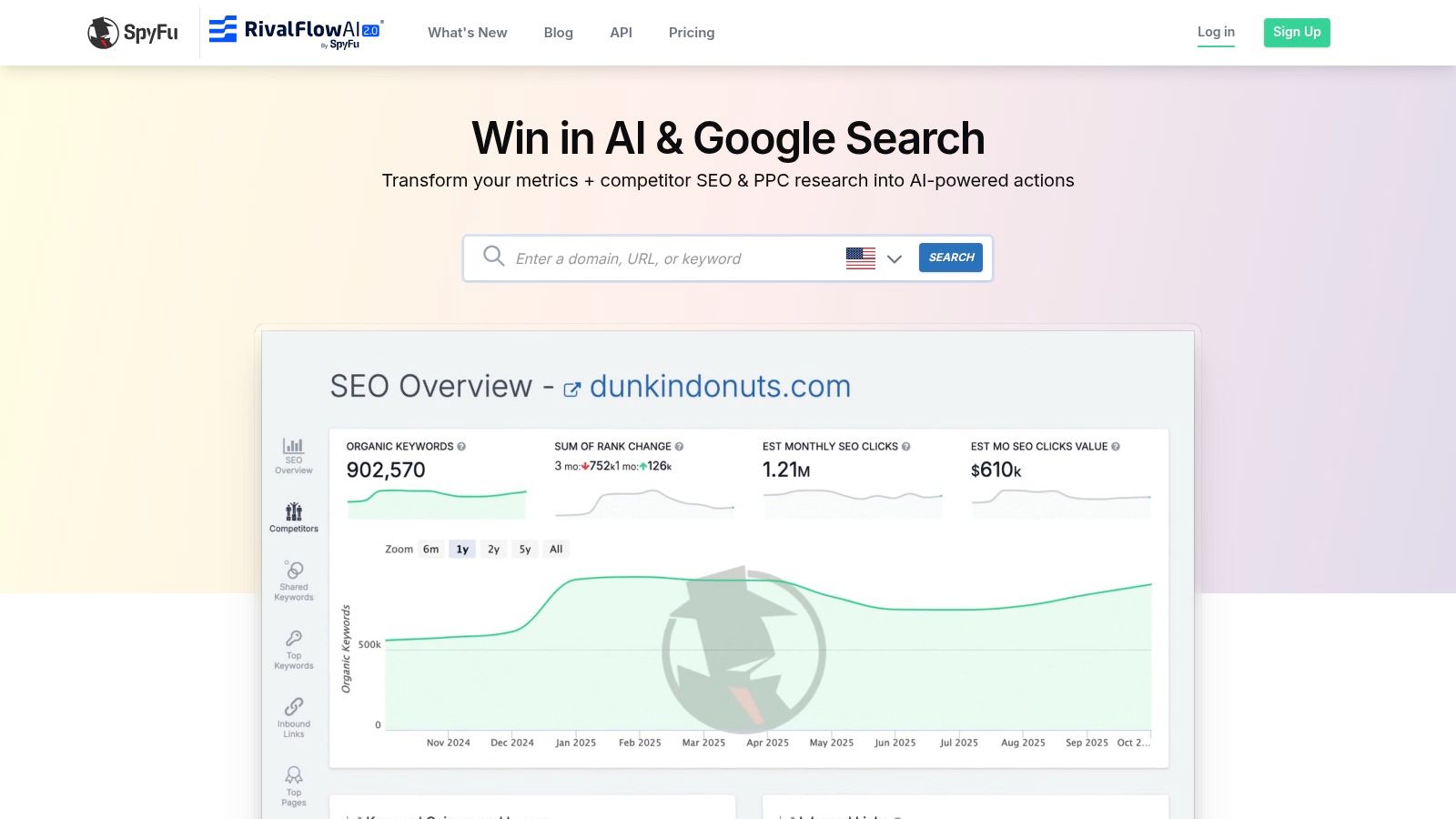
SpyFu is a highly focused competitive intelligence tool renowned for its deep historical data on keywords and PPC ads. For over a decade, it has been scraping search engine results, allowing users to benchmark competitor strategies by looking back at their most profitable keywords and ad campaigns over time. This historical lens makes it an excellent resource for uncovering long term trends and proven tactics. The platform's strength lies in its simplicity and affordability for competitor focused SEO benchmarking.
Historical Competitive Intelligence with this Benchmarking Tool
SpyFu delivers several targeted features ideal for competitive analysis: Competitor Keyword & Ad History with over 10 years of data, Rank Tracking & Reporting to monitor keyword positions against competitors, and a "Kombat" Feature to directly compare domains and find unique keyword opportunities. SpyFu’s introduction of ChatGPT powered recommendations aims to translate its vast historical data into actionable, strategic insights. While laser focused, SpyFu does not offer the site auditing or content marketing tools found in larger platforms. SpyFu is best suited for small to mid sized businesses, freelancers, and agencies who need powerful, direct competitor intelligence without the high cost and complexity of a full SEO suite. It is one of the most effective seo benchmarking tools for teams focused primarily on keyword and PPC gap analysis.
Website: https://www.spyfu.com
8. Similarweb
Similarweb is a powerful market and traffic intelligence platform that provides a high-level view of online activity. While not a traditional SEO tool, it serves as one of the essential SEO benchmarking tools for understanding market context, traffic share, and top acquisition channels, positioning your website’s performance within the broader industry. The platform's strength lies in its ability to deliver competitive intelligence beyond just search. It analyzes traffic data across millions of websites to provide benchmarks for total visits, engagement metrics, and audience demographics.
Market-Level Website SEO Benchmarking
Similarweb offers several features that are perfect for strategic performance benchmarking, such as Competitive Traffic & Market Share Analysis to gauge your digital footprint and Rank Tracker & SERP Tracking to monitor organic keyword performance. Its AI powered features, like its AI agents for market analysis, are moving towards providing more predictive insights. While excellent for market intelligence, Similarweb's deep SEO features are often gated behind higher priced plans. Its entry level pricing can be a significant investment for smaller teams, but the industry level context it provides is often unmatched. Similarweb is best suited for enterprise level marketing teams who need to benchmark their overall digital footprint against an entire industry. For more on this, you can learn more about its role among the top AI brand visibility tools in 2025.
Website: https://www.similarweb.com
9. Sistrix
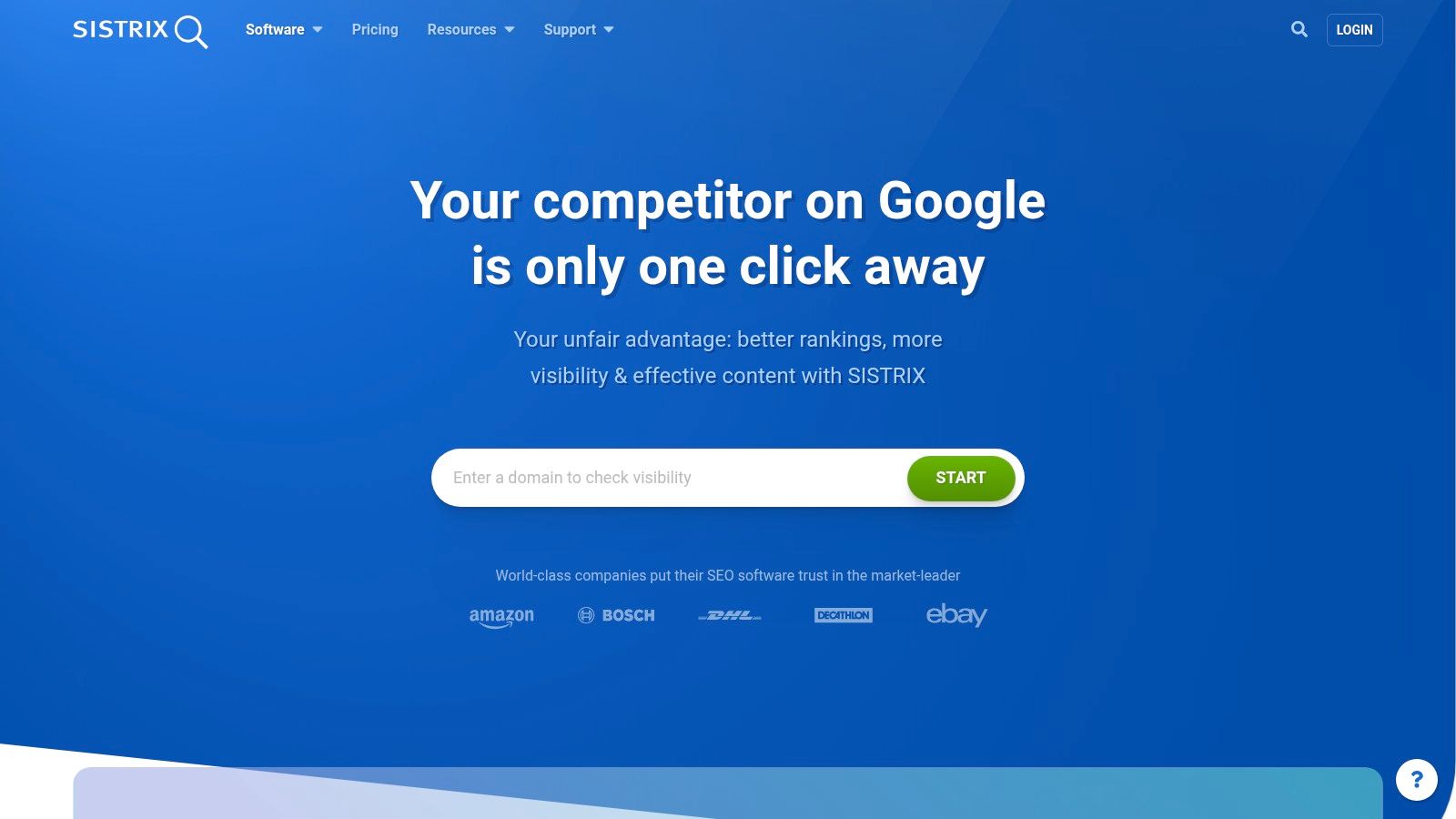
Sistrix is a European born SEO suite renowned for its proprietary Visibility Index, a long standing metric designed to benchmark a domain's organic search performance. It provides a clean, consistent score for comparing your website's search engine footprint against competitors, making it a powerful choice for those who value a clear, historical benchmarking standard across numerous countries. The platform's core strength lies in its extensive historical SERP data, which powers the Visibility Index.
A Top European SEO Benchmarking Tool
Sistrix provides a focused toolset ideal for comparative analysis: the Visibility Index to benchmark overall SEO health, Rank Tracking & Audits to find technical gaps, and Content Discovery & Optimization to analyze top ranking content. According to Sistrix's own data analysis, the Visibility Index is calculated from millions of data points, providing a stable and reliable metric for charting SEO success that is less susceptible to daily keyword fluctuations. While its primary metric is a major advantage, access to the API or higher export limits is reserved for more expensive tiers. Sistrix is best suited for SEO professionals and marketing teams who need a reliable, straightforward metric for competitive benchmarking, especially those managing international SEO campaigns. It is one of the most trusted seo benchmarking tools for tracking long term visibility trends in European markets.
Website: https://www.sistrix.com
10. BrightEdge
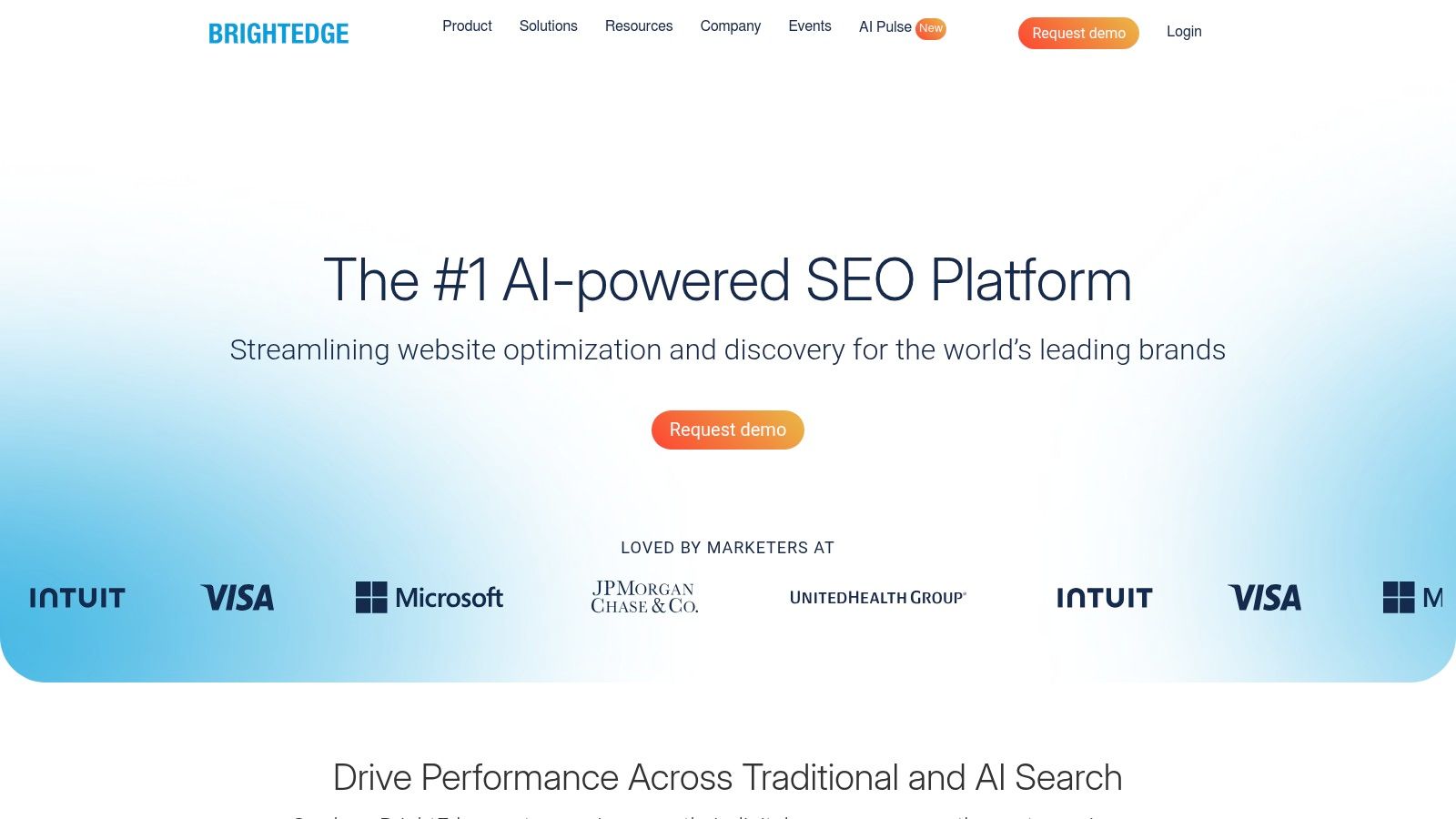
BrightEdge is an enterprise grade SEO performance management platform designed for large organizations that require rigorous governance, dedicated support, and deep integrations. It combines detailed reporting with AI assisted workflows, positioning it as a powerful solution for brands aiming to benchmark and scale their organic search presence in complex, competitive markets. The platform distinguishes itself through its enterprise focus, providing service level agreements (SLAs) and managed services that are often non negotiable for large, centralized SEO programs.
An Enterprise Platform for SEO Benchmarking
BrightEdge provides a suite of tools built for benchmarking at scale, including Share of Voice tracking, Site Audits & Page Reporting, and AI Driven Recommendations. Its emphasis on dedicated customer success and managed enablement services ensures that enterprise teams can make full use of the platform for their specific benchmarking needs, a critical factor for realizing ROI in large scale deployments. The platform’s enterprise level capabilities come with specific considerations. The high touch support model and extensive feature set are intended for large, mature SEO programs, which is reflected in its sales led pricing model. BrightEdge is best suited for large enterprises and global brands that need a highly structured, scalable, and fully supported platform for SEO benchmarking and performance management.
Website: https://www.brightedge.com
11. Botify
Botify is an enterprise grade technical SEO and AI search optimization platform designed for the unique challenges of very large, complex websites. It moves beyond standard analytics by combining large scale crawling, server log file analysis, and robust data pipelines, making it one of the most powerful SEO benchmarking tools for deep technical visibility. The platform's core strength lies in its ability to benchmark a site’s "crawlability" and "indexability" at an immense scale.
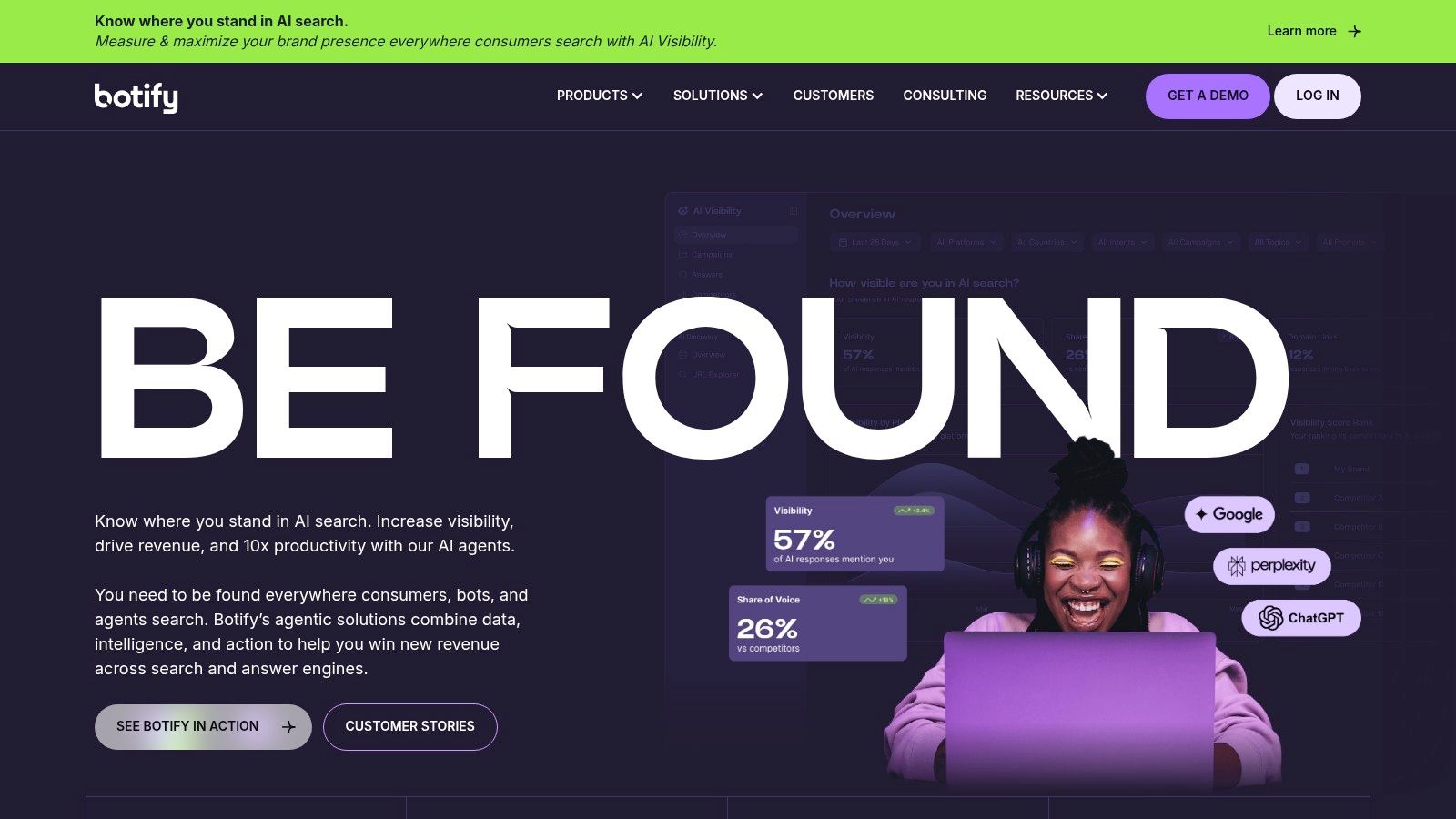
The SEO Benchmarking Solution for Massive Websites
Botify provides several features designed for in depth technical performance analysis: Log File Analysis to offer a definitive benchmark of search engine crawler behavior, Large Scale Crawling for a complete audit of a site’s health, and emerging AI Search Visibility features. Botify's ability to unify crawl data, log files, and analytics provides a singular view of the entire search process, from discovery to conversion. While exceptionally powerful for technical SEO, Botify’s enterprise focus and custom pricing structure make it a specialized solution with a steep learning curve. Botify is best suited for large e commerce sites, publishers, and marketplaces with millions of pages where small technical inefficiencies can lead to massive revenue loss. It is the go to tool for SEO teams needing to benchmark and optimize crawl budget and indexation at an enterprise scale.
Website: https://www.botify.com
12. G2 (SEO Tools Category)
G2 is not a direct SEO tool but a broad software marketplace and review platform that serves as an essential meta tool for the benchmarking process. Its dedicated SEO Tools category aggregates user reviews, ratings, and feature comparisons, allowing teams to efficiently assess available platforms. It is a useful first step in any tool evaluation, helping you validate shortlists and understand real world user sentiment. The platform excels at providing an aggregated, crowd sourced perspective on the market.
A Meta-Tool for Benchmarking the SEO Tool Market
G2 offers a unique approach to benchmarking by focusing on the tools themselves through Filtered Comparisons, Aggregated User Feedback, and Market Research. Its Grid Report visually maps out tools based on market presence and user satisfaction, offering a quick, data driven snapshot of industry leaders and niche players in the SEO benchmarking tools space. G2's value lies in its aggregated user data, which provides an unbiased layer of social proof. While an invaluable research asset, the information is based on user submitted reviews, which can vary in quality. G2 is best suited for marketing and SEO teams in the initial stages of selecting or upgrading their SEO benchmarking tools. It is an indispensable resource for conducting due diligence, comparing options objectively, and ensuring the chosen solution aligns with real user experiences.
Website: https://www.g2.com/categories/seo-tools
Comparing the Best SEO Benchmarking Tools
The table is useful for narrowing the field, but the smarter choice usually comes down to what kind of benchmark you need to trust most: AI visibility, rankings, links, technical health, or enterprise reporting.
| Tool | Core Features | AI & Generative SEO Focus | Best For | Pricing Model |
|---|---|---|---|---|
| Riff Analytics | AI mention tracking, citation source visibility, competitive gap analysis | AI-Native. Tracks mentions and citations across ChatGPT, Perplexity, Google AI Overviews, Gemini, and more. | Teams prioritizing AI and generative SEO visibility. | Subscription Plans (7-day free trial) |
| Semrush | Keyword tracking, site audits, backlink analysis, market research | Broad dataset for discovery; some AI content features. | All-in-one digital marketing teams (SMB to Enterprise). | Tiered Subscription |
| Ahrefs | Backlink index, Site Explorer, Rank Tracker, content analysis | Strong for competitive intelligence; limited direct AI tracking. | SEOs focused on link building and competitor analysis. | Tiered Subscription |
| Moz Pro | Rank tracking, site crawls, Domain Authority metric, keyword research | Traditional SEO metrics, useful for authority benchmarking. | SMBs and agencies needing a user-friendly toolkit. | Tiered Subscription |
| Screaming Frog | Desktop crawler, JavaScript rendering, crawl comparison, custom extraction | Essential for technical AI-readiness and indexation audits. | Technical SEO professionals and agencies. | Annual License |
| BrightEdge | Enterprise platform, AI recommendations, Share of Voice, reporting | AI-driven insights and enterprise-level answer engine features. | Large enterprises requiring governance and managed services. | Custom Quote |
| Botify | Large-scale crawling, log file analysis, technical SEO pipelines | Deep technical data for AI crawl optimization and visibility. | Very large websites (e.g., e-commerce, publishers). | Custom Quote |
For small business benchmarking, a lighter suite usually wins. Moz Pro and SE Ranking are easier to adopt, easier to explain to non-specialists, and less likely to bury a lean team in data they will never use. For agency reporting, Semrush is often the safest pick because it covers enough of the workflow in one place. Ahrefs can be the stronger choice when client conversations revolve around link growth, competitor gaps, and content opportunities rather than polished cross-channel reporting.
For competitor and link benchmarking, Ahrefs and Semrush remain the most practical starting point because they combine domain comparison, keyword overlap, and referring-domain analysis in ways that can quickly produce an action list. I would choose Ahrefs first when link intelligence is the main battleground; I would choose Semrush first when the team also needs rank tracking, site auditing, and broader marketing context. That is the recurring tradeoff in this category: more data depth usually means more cost and more complexity.
For technical benchmarking, the split is clearer. Screaming Frog is ideal when you want direct control, crawl diffs, and a desktop workflow that technical SEOs can run on demand. Botify is better when the site is too large or operationally complex for a desktop crawler to be the main source of truth. For enterprise governance, BrightEdge makes the most sense when reporting structure, support, and internal alignment are as important as the benchmark data itself. And for AI visibility benchmarking, Riff Analytics fills a gap that older suites still do not cover especially well: whether your brand is being cited in answer engines and which competitor pages are winning those citations instead.
Best picks by scenario
- Best for AI citation visibility: Riff Analytics
- Best all-around suite for general use: Semrush
- Best for backlink and competitor gap analysis: Ahrefs
- Best value for smaller teams: SE Ranking
- Best for technical crawl benchmarking: Screaming Frog
- Best for enterprise-scale technical SEO: Botify
- Best for enterprise reporting and governance: BrightEdge
Summary and Final Recommendations
If you are choosing from this list today, the decision is less about finding one universal winner and more about matching the tool to the benchmark that most affects your business. For a team trying to understand AI search visibility and citation gaps, Riff Analytics is the most direct fit. For broad competitive reporting across rankings, links, and audits, Semrush is the safest all-purpose choice. For SEO teams that win through authority building and backlink analysis, Ahrefs remains exceptionally strong. If your problems are primarily technical, Screaming Frog is the practical standard for hands-on audits, while Botify is the better answer for very large sites. If you need easier onboarding and tighter budgets, SE Ranking and Moz Pro are the sensible starting points.
If you are still deciding whether you even need a dedicated platform, start with a one-week baseline exercise. In week 1, save your current position across six categories: rankings and share of voice, because they show whether your visibility is improving relative to true competitors; backlinks and referring domains, because authority gaps often explain ranking gaps; technical health, because crawlability, indexation, speed, and site errors can cap performance before content ever has a chance; organic traffic, because rankings without visits are not a business result; conversions from organic, because benchmark wins should connect to pipeline or revenue; and AI citation visibility, because answer engines increasingly decide which brands get surfaced first. I’d also keep a snapshot of your top 20 revenue-driving pages so changes can be traced back to specific assets instead of averaged away in sitewide reports.
After that first week, set a realistic review cadence. Check rankings, share of voice, and AI citations weekly if search visibility is business-critical. Review backlinks and competitor gaps monthly. Re-run technical benchmarks after releases, migrations, or major content deployments. Revisit the full benchmark quarterly so you can see whether gains in visibility are turning into traffic and conversions. In my experience, teams get more value from a simple, repeated benchmark they review than from a dashboard nobody opens after setup.
The main takeaway is straightforward: benchmark what drives decisions, not just what is easy to export. The best tool is the one that helps you see the right gap early and act on it before competitors widen it.
Frequently Asked Questions
1. What is the most important metric for SEO benchmarking in 2025?
While traditional metrics like keyword rankings and backlinks are still relevant, the most important emerging metric is "answer share" or "citation visibility" within AI search engines like ChatGPT and Google AI Overviews. Tracking how often your brand is cited as a source in generative AI responses is critical for future growth.
2. How do I start an SEO benchmarking analysis for my website?
Begin by identifying 3-5 of your closest competitors. Use a tool like Semrush or Ahrefs to establish a baseline of their organic traffic, top keywords, and backlink profiles. Then, use a specialized tool like Riff Analytics to measure your and your competitors' visibility in AI search. Compare these data points to identify your strengths, weaknesses, and opportunities.
3. Are free SEO benchmarking tools good enough for a serious business?
Free tools can provide a high level overview but often lack the data depth, historical trends, and accuracy required for professional analysis. For serious businesses, investing in a paid platform is essential for gaining actionable insights, tracking performance over time, and understanding the competitive environment in detail, especially for LLM tracking and generative SEO.
4. How can SEO benchmarking tools help with AI search visibility?
Modern SEO benchmarking tools are specifically designed to track your brand's presence in AI-generated answers. They can identify which of your URLs are cited as sources by LLMs, show you where competitors are being mentioned instead of you (citation gaps), and provide data to help you optimize your content to become a more authoritative source for AI engines.
5. How often should I conduct an SEO benchmark report?
For most businesses, conducting a thorough benchmark report on a quarterly basis is a good cadence to track strategic progress. However, key metrics like keyword rankings and AI mentions should be monitored more frequently, either weekly or monthly, to react quickly to market changes and algorithm updates.
Ready to master your visibility in the new era of AI search? Riff Analytics is the first platform built specifically to track your brand’s mentions and citations in generative AI responses. Stop guessing how you appear in AI chat and start benchmarking your performance with precision. Discover your AI search gaps with Riff Analytics today.